

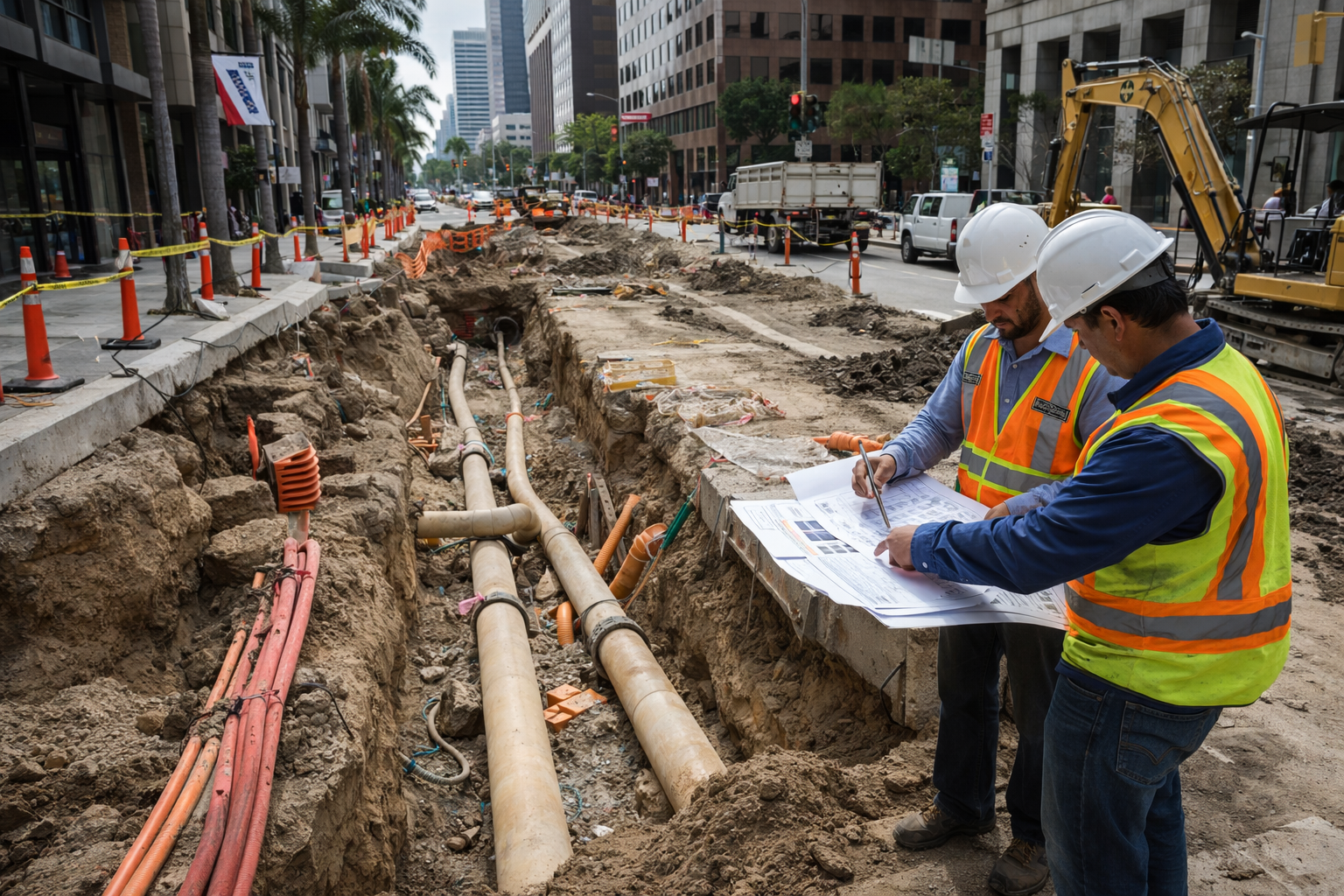
Urban infrastructure projects in California face unique challenges, particularly when it comes to utility coordination in dense and congested corridors. With limited right-of-way availability, aging infrastructure, and stringent regulatory constraints, designing for utility coordination requires innovative approaches and precise execution to avoid project delays or costly conflicts. Whether in bustling metropolitan hubs or rapidly growing cities, utility coordination is a critical aspect to ensure the success of infrastructure and urban development projects.
The Complexity of Utility Coordination in Dense Urban Environments
California’s urban corridors are notorious for their high density, creating a web of utilities that often overlap or conflict. Limited right-of-way is a recurring challenge; as population centers expand, the competition for space between underground and overhead utility lines intensifies. Engineering teams must also account for legacy infrastructure, which can range from outdated water pipelines to obsolete electrical systems that require replacement or rerouting during new construction. These physical constraints are compounded by regulatory challenges, including permitting requirements and compliance with environmental and safety standards.
Addressing these challenges requires strategic planning at every stage of the design process. Without effective coordination, project teams risk encountering field conflicts, costly redesigns, and delays—issues that can derail even the most well-executed projects.
The Role of Accurate Utility Mapping in Reducing Errors
One of the most effective tools in utility coordination is the use of accurate utility mapping and CADD documentation (Computer-Aided Design and Drafting). Through detailed utility surveys and advanced mapping technologies, project teams can identify the location of existing utilities before design work begins.
Utility mapping helps to:
- Identify potential conflicts early. By understanding the precise layout of existing utilities, teams can avoid clashes between new designs and existing structures.
- Streamline the permitting process. Comprehensive documentation ensures regulatory agencies have clear and accurate records to review.
- Enhance constructability. With accurate maps, construction crews are better prepared to execute the project without significant deviations from the design.
When conducted properly, utility mapping not only cuts down on design errors but also minimizes field adjustments during construction, saving both time and money for stakeholders.
Collaborative Coordination Across Stakeholders
Utility design is rarely a solo effort—it requires the collaboration of multiple teams, including utility owners, contractors, designers, and municipal agencies. Establishing effective communication channels early in the project is paramount to ensuring alignment on objectives and avoiding unexpected roadblocks. Regular meetings, shared documentation platforms, and conflict resolution protocols are valuable strategies for fostering productive collaboration.
Additionally, working with experienced technical teams familiar with California’s unique regulatory environment can significantly improve outcomes. Knowledge of local utility standards, permitting processes, and environmental considerations enhances the efficiency of coordination efforts.
Overcoming Challenges with Legacy Systems
California’s infrastructure network includes systems that, in some cases, date back decades or even a century. These legacy systems create technical challenges as they often lack standardized documentation or have been modified over time without proper recordkeeping. Navigating such outdated infrastructure requires meticulous investigation and creative problem-solving to ensure compatibility with new design and construction efforts.
Skilled support teams bring valuable expertise in analyzing and integrating older systems into modern infrastructure projects. This capability reduces risks associated with unforeseen utility complications during construction.
The Importance of Technical Expertise in Urban Projects
Designing utility coordination systems in dense California corridors demands more than just technical skills—it requires experience, adaptability, and precision. Technical teams with a deep understanding of infrastructure projects provide invaluable support, particularly in identifying potential pitfalls and implementing proactive solutions. These professionals not only ensure the integrity of designs but also contribute to the long-term longevity of urban infrastructure, benefiting public and private sector stakeholders alike.
Final Thoughts
Utility coordination in California’s dense corridors is a complex undertaking involving unique obstacles like limited space, conflicting utility lines, and strict regulations. Through meticulous planning, accurate utility mapping, and expert collaboration, these challenges can be effectively managed, allowing projects to move forward smoothly. Experienced teams knowledgeable about California’s landscape and infrastructure systems play a pivotal role in ensuring the success of urban development efforts.
Looking for Trusted Technical Talent or Project Support?
At Darnell Technical Services, we connect companies with skilled professionals in engineering, architecture, and infrastructure. Whether you need temporary staffing or long-term project support, we’re here to help you succeed.
📞 Contact us today at Corporate (714) 285-0082 or Las Vegas Office (702) 829-8446 — let’s build something great together.