
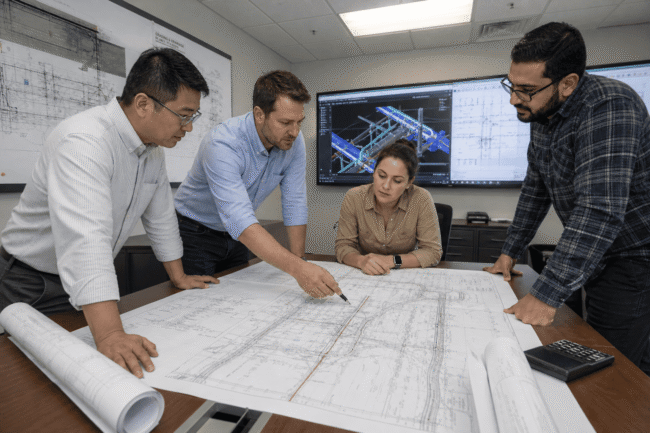
Project team using technical drawings to reduce RFIs in construction

How Clear Technical Drawings Reduce RFIs in Construction Projects

Clear technical drawings reduce RFIs in construction projects because they give field teams, contractors, and reviewers better direction before questions turn into delays. When plans are detailed, organized, and consistent, the construction team spends less time requesting clarification and more time moving work forward. Requests for Information often increase when drawings leave too much room…

Engineering team improving consistency across multi-discipline drawings

From Concept to Construction: The Role of Drafting in Every Project Phase

The technical drafting role is essential from the earliest project discussions to the final construction package. Drafting helps turn ideas into organized documents that support review, coordination, and decision-making throughout the life of a project. That value becomes especially clear in infrastructure, architecture, transportation, energy, and public works work, where multiple teams may need reliable…

Civil engineers using specialized drafting services to review technical CAD drawings

Specialized Drafting Services for Civil Engineers

Civil engineering projects are intricate and multifaceted, requiring precise planning, design, and execution to ensure success. With these complexities, specialized drafting support has become a key component in enhancing the efficiency and accuracy of civil engineering teams. Leveraging expert drafting services improves plan clarity, reduces request for information (RFI) volumes, and streamlines review cycles—ultimately driving…

CADD file management practices for long-term infrastructure projects

CADD File Management Best Practices for Long-Term Infrastructure Projects

Infrastructure projects, especially large-scale, multi-year initiatives, present unique challenges in document control and technical coordination. Proper management of Computer-Aided Design and Drafting (CADD) files is critical to ensuring project success, avoiding costly errors, and maintaining compliance with industry standards. Companies overseeing these projects cannot afford disorganized file structures, version control issues, or audit readiness gaps.…