
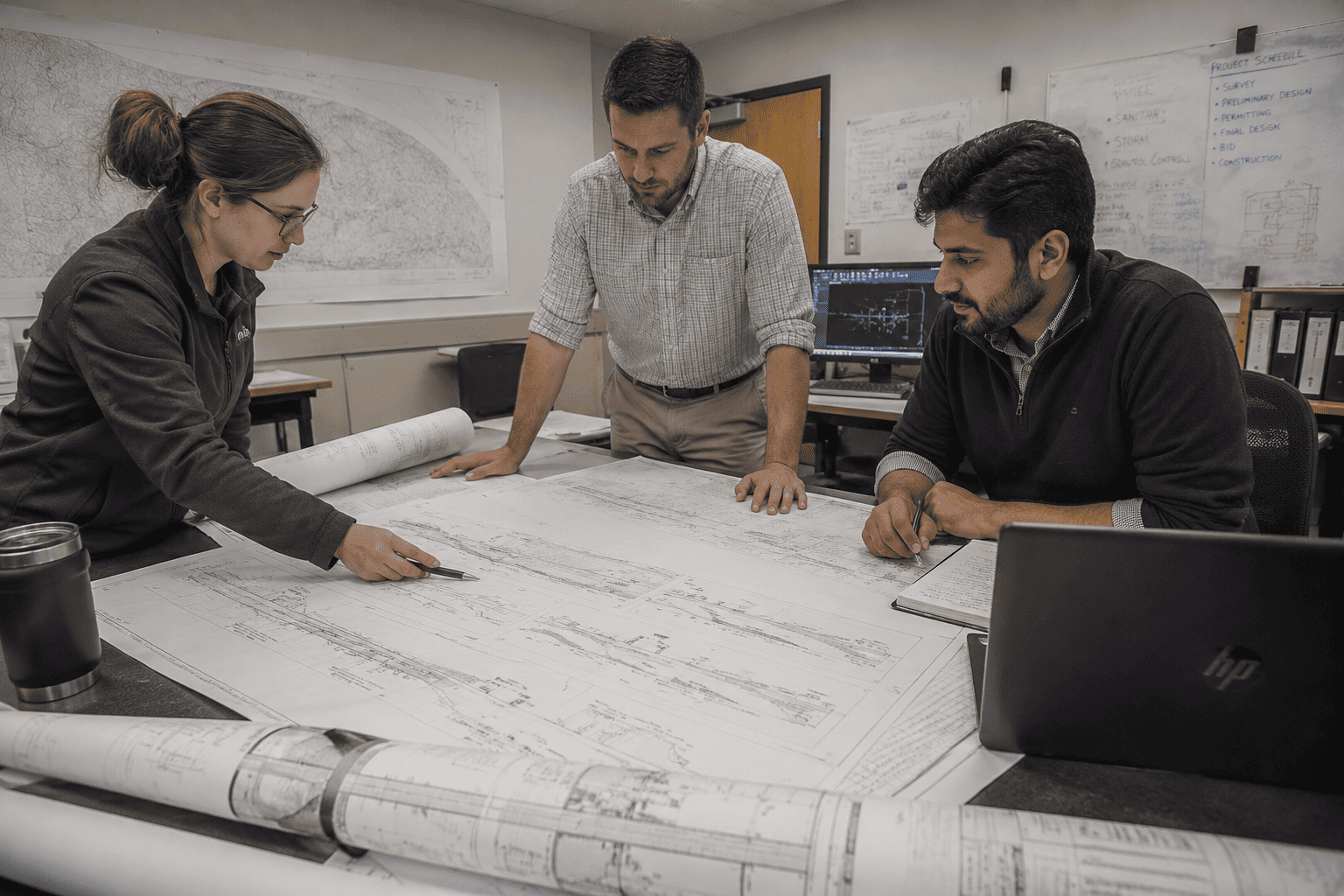
Civil drafting challenges can slow down engineering work when teams are dealing with conflicting data, outdated files, and coordination gaps at the same time. In infrastructure, transportation, and public works projects, those issues rarely stay isolated. They can affect review cycles, drawing quality, and how efficiently technical teams move from design updates to deliverables.
The good news is that these problems are manageable when drafting support is organized, disciplined, and closely aligned with the larger project team. The goal is not to remove complexity from civil drafting. It is to reduce avoidable rework and keep the project moving with better control.
Why Civil Drafting Challenges Build Quickly
Civil drafting sits between design intent and production accuracy. Drawings have to reflect current engineering direction while staying coordinated with markups, reference files, and project requirements. If one source changes without clear communication, the drafting team can lose time correcting details that were based on incomplete or outdated information.
That is why many drafting challenges are workflow problems as much as technical ones. Small coordination gaps can quickly become larger delivery risks.
Common Problems That Disrupt Drafting Work
Conflicting Data From Multiple Sources
Survey information, background files, consultant inputs, and engineering markups do not always line up perfectly. When sources conflict, drafting teams need a clear process for identifying the controlling information before production time is spent in the wrong direction.
Outdated Files and Revision Confusion
Outdated base files remain one of the most common causes of rework. A missed revision or misnamed file can affect multiple sheets and force teams to retrace steps that should already have been complete.
Coordination Issues Across Teams
Drafting support works best when it stays connected to engineers, project leads, and adjacent disciplines. Without regular coordination, drawings may fall behind current decisions, creating confusion during review and slowing approvals.
How Experienced Technical Teams Overcome Them
Experienced teams address conflicting data by confirming sources early, documenting assumptions, and escalating open questions before they spread into multiple sheets. This keeps technical effort focused on production that is more likely to hold through later review stages.
They also reduce outdated-file risk through disciplined version control, clear naming conventions, and regular checkpoints. When revision handling is consistent, teams spend less time hunting for the right file and more time improving the drawing set itself.
Coordination issues improve when drafting support is treated as part of the project workflow instead of a disconnected production function. Routine communication with project stakeholders helps technical teams respond faster and with fewer unnecessary revisions.
Practical Habits That Protect Project Momentum
A short pre-production review, an agreed revision process, and documented drawing assumptions can prevent many avoidable delays. These habits are simple, but they support cleaner deliverables and better alignment across infrastructure and engineering projects.
When civil drafting challenges are managed early, technical teams can maintain stronger accuracy, smoother coordination, and more reliable project momentum.
Looking for Trusted Technical Talent or Project Support?
At Darnell Technical Services, we connect companies with skilled professionals in engineering, architecture, and infrastructure. Whether you need temporary staffing or long-term project support, we’re here to help you succeed.
📞 Contact us today at Corporate (714) 285-0082 or Las Vegas Office (702) 829-8446 — let’s build something great together.