
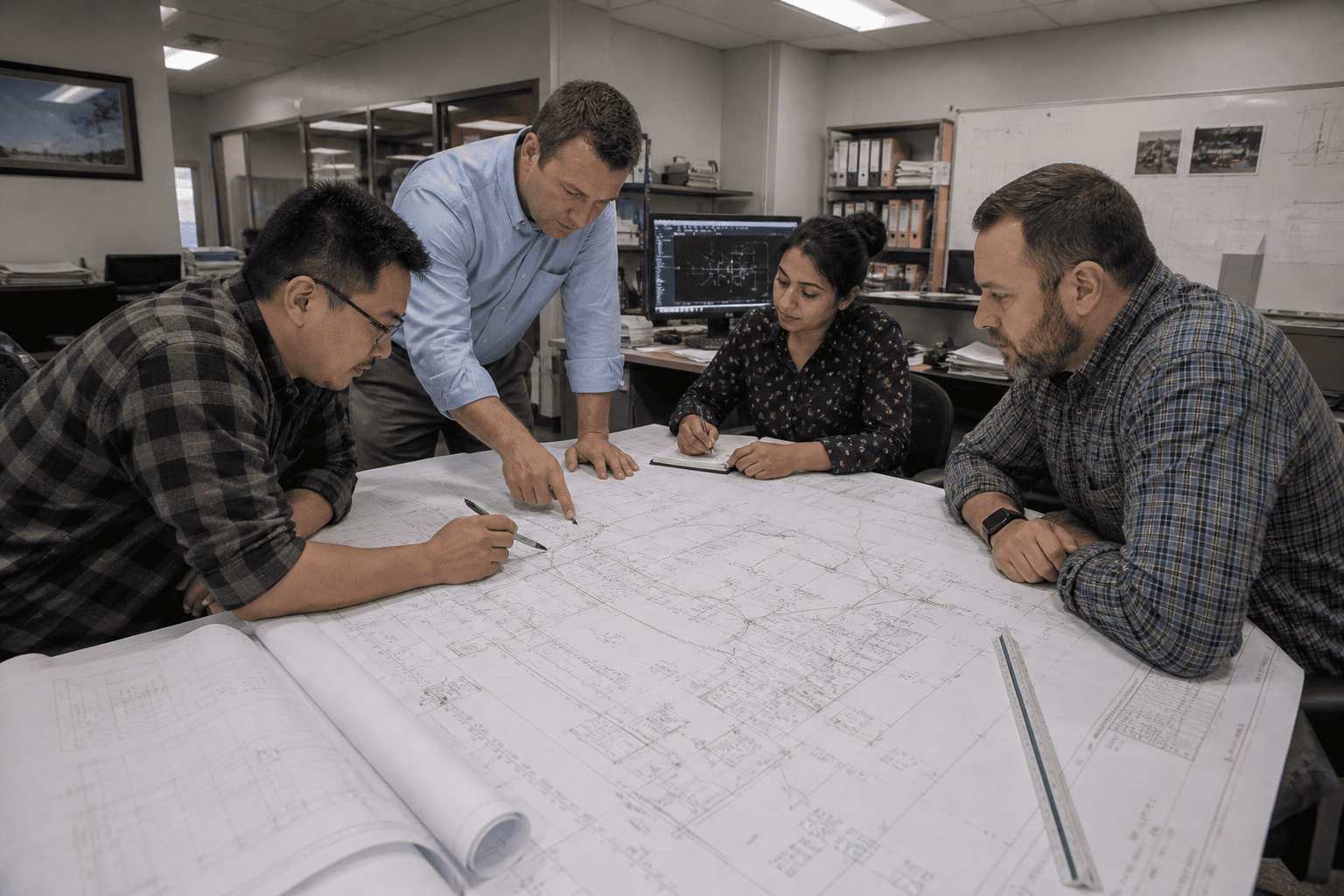
Redline markups are one of the most practical tools for keeping engineering design workflows clear, organized, and efficient. When engineers and drafters use a consistent redline process, project updates move with less confusion and design intent is easier to translate into accurate revisions.
That clarity matters on infrastructure, architecture, transportation, and public works projects where multiple people may touch the same drawing set. A weak markup process can lead to preventable mistakes, while a strong one helps teams reduce rework and keep schedules moving.
Why Redline Markups Matter in Design Coordination
Engineering drawings often go through several review cycles before they are ready for issue or construction use. During those cycles, markups become the bridge between technical decisions and drafting execution. If that bridge is unclear, every handoff becomes slower and more error-prone.
Clear redline markups help ensure revisions are understood the first time. They give drafters a more reliable path to update plans, details, notes, and related sheets without making assumptions about what the engineer intended.
How Consistent Redlines Improve Workflow
Better Communication Between Engineers and Drafters
When redlines are legible, complete, and logically organized, drafters can focus on production instead of interpretation. That reduces back-and-forth clarification and helps teams use their time more efficiently.
Fewer Revision Cycles
Incomplete or inconsistent markups often create avoidable follow-up comments in the next review round. A disciplined redline process can reduce those extra cycles by making the requested changes clearer from the start.
Faster Project Progress Without Sacrificing Accuracy
Speed improves when revisions are easier to execute correctly. Consistent markups help technical teams move faster because fewer drawing elements need to be revisited after the initial update.
What Strong Redline Practices Usually Include
Effective redline workflows usually include clear notation, direct references to affected areas, and enough context for the drafter to understand why the change is being made. They also benefit from review habits that check whether the change affects related sheets, details, or disciplines.
Consistency is especially important when multiple reviewers are involved. Standard markup habits make it easier for the drafting team to follow instructions across different project leads and document sets.
A Better Markup Process Supports Better Deliverables
The value of redline markups in engineering design workflows goes beyond neat comments on a drawing. A strong process improves communication, reduces unnecessary revisions, and helps project teams complete updates with more confidence and efficiency.
For firms managing complex technical work, consistent redline practices are a practical way to strengthen drawing quality and support faster project completion.
Looking for Trusted Technical Talent or Project Support?
At Darnell Technical Services, we connect companies with skilled professionals in engineering, architecture, and infrastructure. Whether you need temporary staffing or long-term project support, we’re here to help you succeed. 📞 Contact us today at Corporate (714) 285-0082 or Las Vegas Office (702) 829-8446 — let’s build something great together.